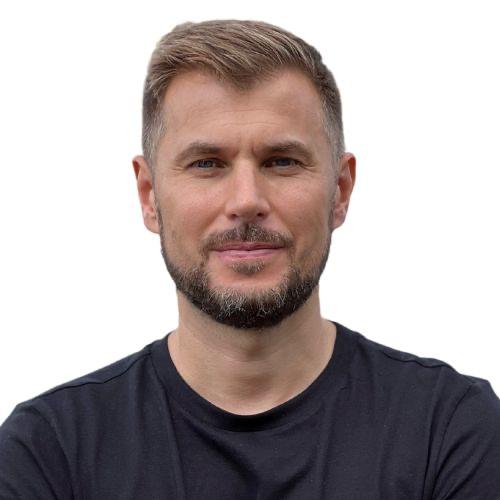
 Oleg Ivanov
I've been building things for as long as I can remember.
Not "thinking about building things." Building them. Kindergartens, tourist agencies, P2P lending platforms, asset management tools, DeFi protocols, event businesses, data analytics products, content management systems. Across FMCG, education, tourism, fintech, venture, and a dozen other industries. Across more countries than I can list without sounding like I'm showing off.
Some worked. Most didn't. A few made real money. Several burned real money.
The pattern that wouldn't stop
If you're an entrepreneur, you know the disease. You walk into a restaurant on vacation and before you've ordered, you're counting seats, estimating average check, eyeballing staff costs, and running a gross margin calculation in your head. You can't turn it off. Every problem looks like a business. Every business looks like a problem you could solve better.
I lived inside this loop for almost three decades. Hundreds of folders. Spreadsheets, flowcharts, pitch decks. Ideas I was sure would work — until they didn't.
The pattern I kept seeing, in my own failures and in every founder I talked to: the ideas weren't bad. The timing was. Or the demand wasn't real. Or someone had already won and I hadn't checked. The gut said go. The market said no.
What changed
Two things happened at once.
First, AI dropped the barrier to build. What used to take a team of five and three months now takes one person and a weekend. That's not hype — I've shipped products over weekends that would have been six-month projects five years ago.
Second, the bottleneck moved. If anyone can build anything in a weekend, the scarce resource isn't engineering anymore. It's knowing what's worth building. The founders who win aren't the fastest builders. They're the ones who validate before they commit.
I looked for a tool that did this — that would tell me whether real people were already searching for a solution, complaining about the problem, and paying for alternatives. Not a brainstorming chatbot. A system that hits live market data and gives me a number I can trust.
It didn't exist. So we built it.
What Fluenta is
Fluenta is the validation companion I wish I'd had for the last 20 years.
Every week, we ingest startup ideas from 200+ sources — VCs, accelerators, media, consulting firms, Reddit, GitHub, Product Hunt. We score each one against 25 live data integrations today — a number that grows monthly as new sources prove reliable: search volume, complaint threads, competitor pricing, funding flows, urgency signals. The output is a Launch Readiness Score — a 0-to-100 rating of whether the market is ready for this idea right now.
You can browse the scored ideas to find inspiration. Or you can bring your own idea and run an X-Ray — the same 25-integration pipeline, applied to whatever you're thinking about building. 20 minutes later, you know whether to commit or move on.
The goal is simple: a startup factory tailored to you. Flip through ideas daily. Run tests in parallel. When you spot real demand, build with conviction. Close or sell the ones that don't work. Partner with someone who can accelerate the ones that do.
What we believe
We believe in human creativity. AI will replace truck drivers and receipt-stampers and paper-shufflers — and that's fine. Humans should spend their energy finding things that excite them and building things that matter.
We also believe that creativity without evidence is expensive. The average founder spends 3–6 months on an idea before discovering nobody wants it. That's not a failure of ambition. It's a failure of validation.
Fluenta exists to close that gap.
Where we are
Early. The product is live, the data pipeline runs daily, and real founders are using it. But we're nowhere near done. The roadmap is long, the feedback queue is longer, and we're improving the scoring model every week based on what actually happens to the ideas we score.
We appreciate every one of you who takes the time to test Fluenta, watch how we evolve, and give us honest feedback. Brutal honesty is gold to us — it's the only signal we trust as much as the data.
— Oleg Ivanov, Co-founder & CEO