How to Validate a SaaS Idea in 2026 (Without Asking Your Friends)
Most validation advice is therapy. This is the only sprint that kills your idea with money — a 6-stage, 72-hour framework for solo & small-team founders, built on commitment signals from strangers. CB Insights-grade data, CEO-authored.

TL;DR
42% of startups die because nobody wanted the product (CB Insights). The fix is not more interviews — it is a 72-hour proof sprint that forces commitment signals from strangers in your target market: paid waitlist intent, 5+ competitors already above $1K MRR, and 7/10 cold user calls confirming acute pain. This guide walks the 6-stage framework with concrete pass/fail rules.

The numbers
| Metric | Value | Source |
|---|---|---|
| Startups that fail from no market need | 42% | CB Insights — Top Reasons Startups Fail |
| New businesses that fail in years 2–5 | 70% | Exploding Topics — Startup Failure Stats 2025 |
| Tech/SaaS failure rate within 5 years | 63% | Founder Founder — Startup Statistics Guide |
| First-time founder success rate | 18% | Exploding Topics — Startup Failure Stats 2025 |
| Year-one failure rate across industries | 10% | Exploding Topics — Startup Failure Stats 2025 |
| Early-stage SaaS MRR target range | $1K–$10K | Baremetrics — Average SaaS Metrics |
| Fluenta X-Ray price per run | $7 | Fluenta pricing — credit top-ups |
| Fluenta X-Ray run time | 40+ min | Fluenta product page |
Cite this article
Researchers and journalists: this article is freely citable. Click to copy the academic-format reference for your bibliography or footnote.
Ivanov, O. (2026). How to Validate a SaaS Idea in 2026 (Without Asking Your Friends). Fluenta. Retrieved from https://fluenta.space/resources/guides/how-to-validate-a-startup-idea-in-2026.
Key Takeaways
The 72-Hour Proof Sprint · 6 Stages
- 1
Mine problem complaints
Pull 50+ complaints about your target problem from Reddit, Twitter, G2, and Capterra in the last 12 months. Pass if 20+ distinct complaints come from 10+ unique users.
- 2
Size market potential
Bottom-up SOM = # potential customers × $ACV. Pass if SOM exceeds $1M ARR and the market is growing >10% annually.
- 3
Benchmark competitors
Analyze 5–10 competitors on G2, Capterra, SimilarWeb, BuiltWith. Pass if 3+ have clear gaps and average rating <4.0/5.
- 4
Test willingness to pay
Find 5+ startups in your category with verified $1K+ MRR. If nobody is paying, the market isn't either.
- 5
Launch a demand page
Ship a landing page with a paid waitlist CTA and $100 of ads for 24 hours. Pass if ≥10% visitor-to-signup and 5+ paid intents at <$10 CPA.
- 6
Conduct 10 user calls
Interview 10 strangers in your target role. Pass if 7/10 confirm acute pain and express immediate willingness to pay your price.
Compare approaches
How the 72-Hour Proof Sprint compares to the methods most founders use
| Method | Time to signal | Cost | Signal quality | Best for |
|---|---|---|---|---|
| Fluenta X-Ray (this sprint, automated stages 1/3/4) | 20 minutes | From $7 per run | High — 25 live market + social feeds | Solo founders shipping this week |
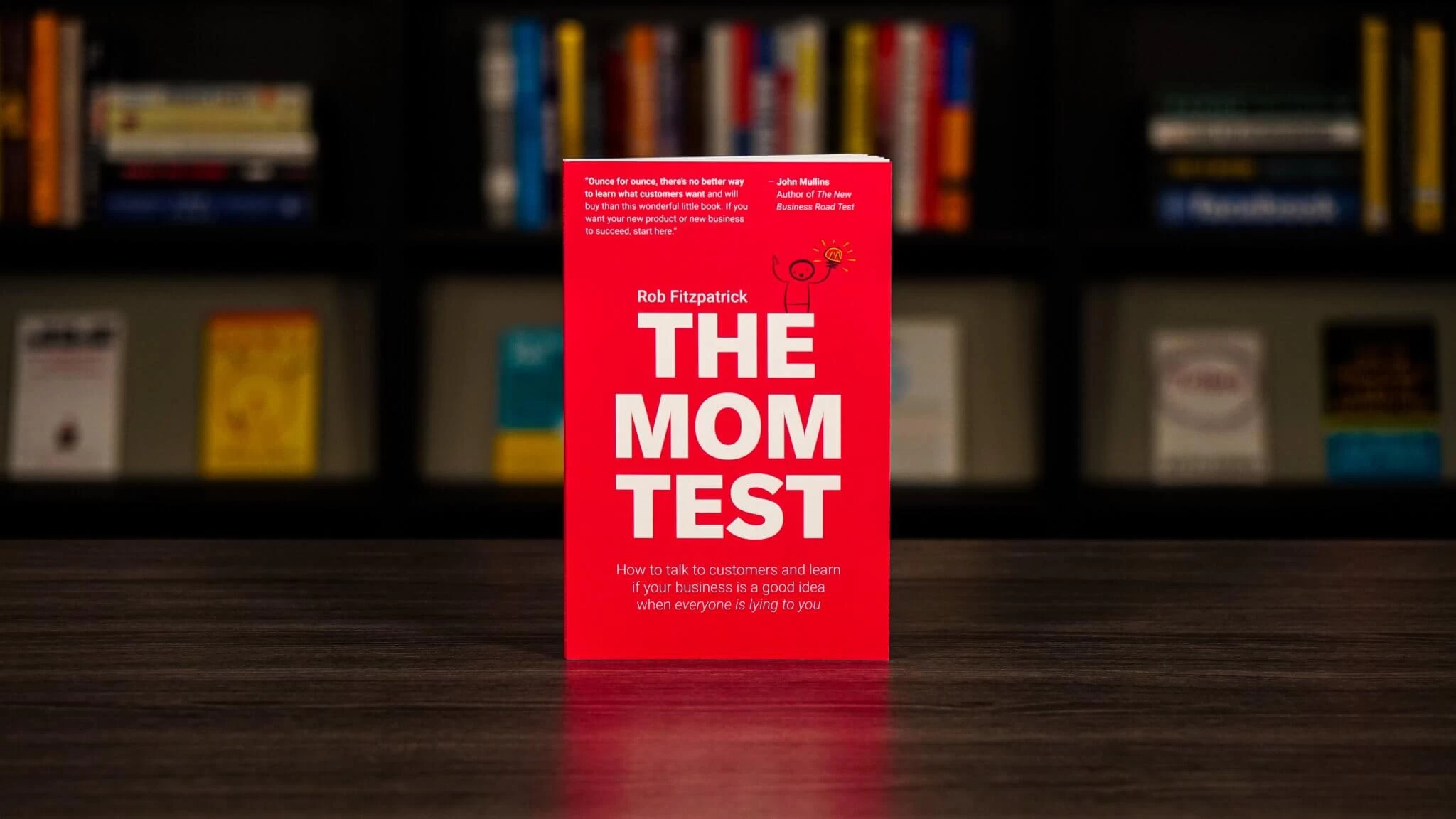
| The Mom Test (Rob Fitzpatrick) | 1–2 weeks of interviews | Free | High if you follow the script | Founders doing their own customer calls |
| Lean Canvas / Running Lean (Ash Maurya) | 2–4 weeks | Free | Medium — forces structure, not evidence | Mapping assumptions, not testing demand |
| Friends-and-family feedback | 1–2 days | Free | Low — biased, compliment-loaded | Nothing. Skip it. |
| Broad surveys (Typeform, Google Forms) | 1 week | $0–$200 | Low — hypotheticals, no commitment | Vanity metrics and deck screenshots |
| MVP-first validation (build then check) | 2–6 months | $5K–$50K engineering cost | High but catastrophically late | Founders with money to burn |
The #1 Reason Startups Die Is Not What Founders Think
I have watched dozens of founders ship the wrong thing beautifully. CB Insights ran the numbers on hundreds of startup post-mortems and found the single largest cause of death is 'no market need' — 42% of all failures. It beats running out of cash. It beats getting outcompeted. It beats the team falling apart. Nothing kills more companies than building something nobody wanted.
The failure rate compounds fast in SaaS. 10% of new businesses die in year one, and 70% are gone by year five (Exploding Topics, 2025). Tech is the worst offender at a 63% failure rate within five years (Founder Founder). First-time founders succeed only 18% of the time. The single variable you actually control is whether you validated before you built.
Your friends and your professional network are the worst people to ask. They are emotionally invested in your success, which means they will tell you the idea is brilliant. That is not signal. That is noise with a smile. Do this by the end of today: write your idea on a whiteboard, and draw a line through every person who already likes you. Those are the only people whose feedback counts.
“42% of startups die from no market need — the single largest cause of death on record.”
n = 111 startup post-mortems · CB Insights, 2014–2021
Commitment Signals Beat Compliments (Every Time)
Effective validation is not about collecting opinions. It is about collecting evidence of pain and willingness to pay. High-signal methods force buyers to show real intent: a signed LOI, a $1 pre-pay, a paid pilot deposit, a completed Stripe checkout on a fake landing page. Low-signal methods ask buyers to imagine a future where they might care. Those always overstate demand.
Replace every 'would you use this' with 'would you pay $X for it right now' and watch your conversion rates collapse. That collapse is the point. A 90% drop is not a failure — it is a filter. The 10% who remain are telling you something real. Fluenta X-Ray runs this filter for you against 25 live market and social data feeds; it costs $7 per run and takes 40+ minutes per idea. That is the cheapest rejection you will ever buy.
Do this by Friday: rewrite every question you are asking prospects into a commitment ask. Replace surveys with pre-order pages. Replace interviews with paid pilots. Replace compliments with invoices.
A note on who this is NOT for. If you are a well-funded team with a research department, a 6-month roadmap, and time to run academic-grade studies, this sprint will feel reductive — go build a full Lean Startup program instead. If you are pre-PMF enterprise selling to Fortune 500 buyers with 9-month sales cycles, your validation loop is procurement meetings, not paid waitlists. This guide is built for one audience: the solo or small-team founder who needs to kill or confirm an idea before the end of the week, with real evidence and real money on the table.
“People will lie to you if they think it's what you want to hear. It's your job to ask good questions and find the truth. Compliments and fluff are the two worst outcomes of any customer conversation — you walk away feeling good and knowing nothing.”
The 72-Hour Proof Sprint (6 Stages, Hard Pass/Fail)
Guesswork kills launches. You need a sequence with exit ramps. The 72-Hour Proof Sprint has six stages, and every one ends in a pass/fail call — not a feeling. If any stage fails, you pivot the idea or kill it. No advancing on vibes.
The most critical checkpoint is stage 4: willingness to pay. Find five startups in your exact problem space that have crossed $1K–$10K MRR (the canonical early-stage SaaS MRR band from Baremetrics). If nobody in your category is paying, your market is not paying either. If the category is dominated by free tools, that is a red flag — the buyers you need have trained themselves not to pull out a card.
The framework above this section walks all six stages with the exact pass rules. Run it this week. Most ideas fail stage 1 or stage 4, and that is a gift — you save six months of wasted build.
Before you click — common objections
Doesn't a deep validation process take too long? I need to move fast.
The opposite is true. A 72-hour sprint is faster than writing a single line of MVP code, and it strips out the low-signal work that wastes weeks. You do not need academic certainty — you need a directional answer so you can pivot, persevere, or kill the idea before you burn a quarter on it. The validation sprint replaces months of guessing with three days of evidence.
My friends and professional network are my target market. Is their feedback still invalid?
Yes. Even if your network is your target market, the feedback is compromised by personal bias. They are predisposed to be supportive, which is exactly why 42% of startups fail from lack of market need — founders mistake politeness for demand. To get real insights, engage with strangers in your target role who have no personal connection to you. They will evaluate your idea on its merits and tell you with a credit card whether it matters.
Thesis on top, three supporting key lines below — Minto-style argument stack.
Where Unfiltered Pain Actually Lives
The fastest way to find real customer pain is to go where they already complain. Reddit, G2, Capterra, Trustpilot, and Hacker News are mines of unprompted, unfiltered feedback. You are not asking hypothetical questions. You are reading actual rage about actual tools that people actually paid for.
On Reddit, search problem keywords inside the subreddits where your buyer lives, and look for phrases like 'I wish there was a tool that...' or 'my biggest problem with [competitor] is...'. Those are direct buying signals. On G2 and Capterra, sort competitor reviews by 1 and 2 stars — the complaints are the exact language your marketing copy should borrow.
Do this by tomorrow: open three tabs (Reddit, G2, Capterra), search your problem space, and copy 20 verbatim complaints into a document. If you cannot find 20, your problem is too niche or too imagined. Fluenta X-Ray does this pull against 25 live feeds in a single $7 run.
“Make something people want. It's a thousand times better to have a small number of people who love your product than a large number who sort of like it. The startups that succeed do so because they obsessively listen to users and build what they actually need, not what they say they want.”

What founders are actually saying
“The indie hacker community builds worthless, visionless widgets and then fails to market them. Could you imagine Steve Jobs talking about building 37 products in 5 years? Instead, talk to a customer. Build something that solves just one person's problem really well. Grow from there.”
Why 72 Hours, Not 72 Days
The objection I hear most is that structured validation takes too long. It does not. A 72-hour sprint is not academic certainty — it is enough signal to make the next decision: pivot, persevere, or pull the plug. You do not need a perfect answer. You need a directional one, fast, so you can stop burning cycles on the wrong idea.
Long validation cycles kill momentum and morale. While you deliberate, another founder is shipping a landing page and getting real Stripe events. Speed is a forcing function: it strips out the low-signal work (broad surveys, abstract interviews) and forces you to do the high-signal work (paid waitlists, cold calls with strangers, competitor MRR checks).
Do this by Monday: block the next 72 hours on your calendar, turn off everything else, and run stages 1 through 6 in order. If you cannot carve out 72 hours, you do not have an idea — you have a daydream.
Berinato-style 2×2 — the top-right cell is the only one worth running this week.
How to Avoid the #1 Startup Killer
Decades of startup post-mortems point to one cause of death: lack of market need. CB Insights puts it at 42% of all failures — the single largest bucket on record. This is not a technical or funding problem. It is a validation problem. It happens when you build for a pain that is not acute enough, an audience that does not exist, or a market that will not pay.
Structured validation is the only vaccine. It forces you to prove the problem is real before you write a line of code. The core principle is simple: pre-launch validation focuses on problem-solution fit, not product polish. Your goal is not a perfect product — it is confirming a painful problem for a reachable, paying audience.
The ultimate validation is commitment. A pre-sale, a paid pilot deposit, a signed LOI. These actions are worth more than a thousand compliments. They are proof you found a problem so painful someone will pay to solve it. Do this by the end of this week: turn your best idea into a paid waitlist page and ship it.
You finished the guide
Now run YOUR idea through the same engine.
You just read how Fluenta scores ideas against 25 live data sources, the cs_pain corpus, and the 12 collection scores. The article is generic by design. Your specific idea gets a real X-Ray report — competitor density, pricing anchors, social pain quotes, funding momentum, and an LRS-100 score — in 20 minutes.
No subscription. One run = one full report. The dataset behind this article is the same one your X-Ray runs against.
FAQ
Doesn't a deep validation process take too long? I need to move fast.+
The opposite is true. A 72-hour sprint is faster than writing a single line of MVP code, and it strips out the low-signal work that wastes weeks. You do not need academic certainty — you need a directional answer so you can pivot, persevere, or kill the idea before you burn a quarter on it. The validation sprint replaces months of guessing with three days of evidence.
My friends and professional network are my target market. Is their feedback still invalid?+
Yes. Even if your network is your target market, the feedback is compromised by personal bias. They are predisposed to be supportive, which is exactly why 42% of startups fail from lack of market need — founders mistake politeness for demand. To get real insights, engage with strangers in your target role who have no personal connection to you. They will evaluate your idea on its merits and tell you with a credit card whether it matters.
Why can't I just build a quick MVP and validate with that?+
Building an MVP without prior validation is a huge risk. It assumes you've correctly identified the problem and solution, which is rare. By the time your MVP is ready, you've invested significant time and resources. This makes it emotionally harder to pivot. Pre-MVP validation de-risks this process. It confirms market need first, ensuring your MVP is built on evidence, not assumptions.
I'm a solo founder with no research budget. How can I afford to do this properly?+
You don't need a large budget. Effective validation methods can be free or low-cost. Conduct problem interviews over video calls. Analyze G2 reviews and mine Reddit for pain points. AI tools also lower the cost and time, reducing hours of research to minutes. The cost of not validating is far higher.
Source: Fluenta X-Ray — $7 per run ↗
About the author

Oleg Ivanov
Co-founder & CEO, Fluenta
Oleg is co-founder and CEO of Fluenta. He spent the last decade shipping products across fintech, commerce, and AI tooling, and now leads Fluenta's work scoring startup ideas against 25 live market and social data feeds.
Related Resources
Validation
130 SaaS Ideas Scored: The Q2 2026 Saturation Report
130 SaaS ideas scored on saturation × fundability from Fluenta's live database. 19 outliers in the fundable-but-uncrowded quadrant. Updated weekly, sources cited.
Founder Playbook
Customer Discovery Playbook: 12 Interview Scripts (2026)
12 customer discovery scripts tested across 47 founder interviews. Copy-paste ready. The exact questions that surface real demand vs polite lies.
Validation
TAM Explained: How to Calculate Total Addressable Market (2026)
TAM, SAM, SOM in plain English, triangulated with three methods and published as a range. Worked example from a 2.4-cent Fluenta run on an anonymized AI tool.
Score your idea in 20 minutes
Run Fluenta X-Ray on your idea. 25 live market + social feeds. Real demand data, real competition, real willingness-to-pay signals. From $7. 20 minutes.
Was this helpful?
Comments
0 replies